
What appears to be a simple requirement is often the toughest battlefield for engineers.
What appears to be a simple requirement is often the toughest battlefield for engineers.
During the establishment of a project, engineers often encounter requests from clients that seem “ordinary” at first glance. Yet once they dive into execution, they discover that these requests involve multiple technical challenges such as antenna redesign, RFID firmware adjustments, and changes to reading logic, and all of them are on the premise that the RFID tags themselves cannot be altered.
The following real-world case illustrates how engineers tackled and resolved these challenges step by step.
Background of the Case:
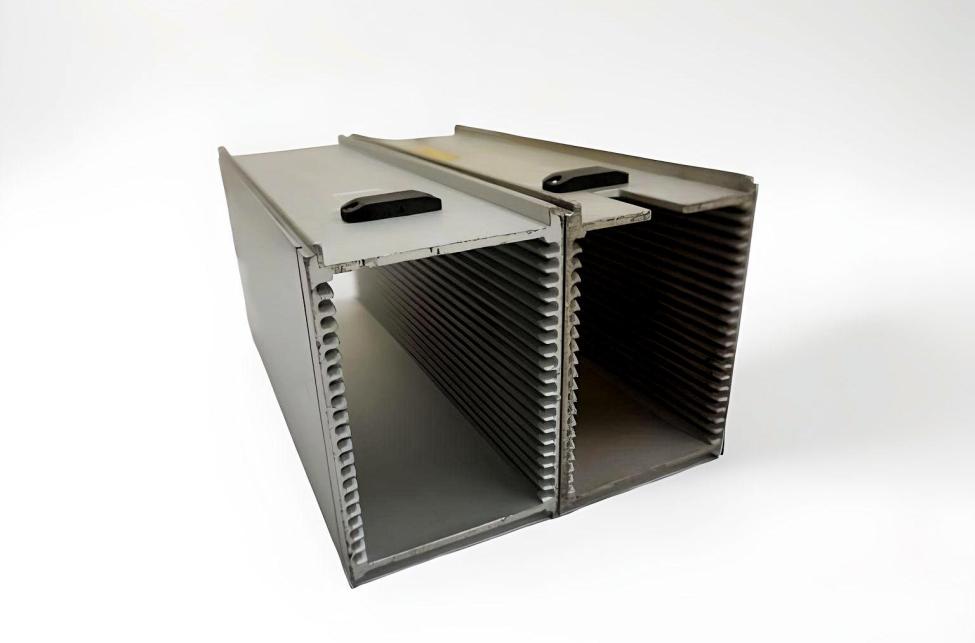
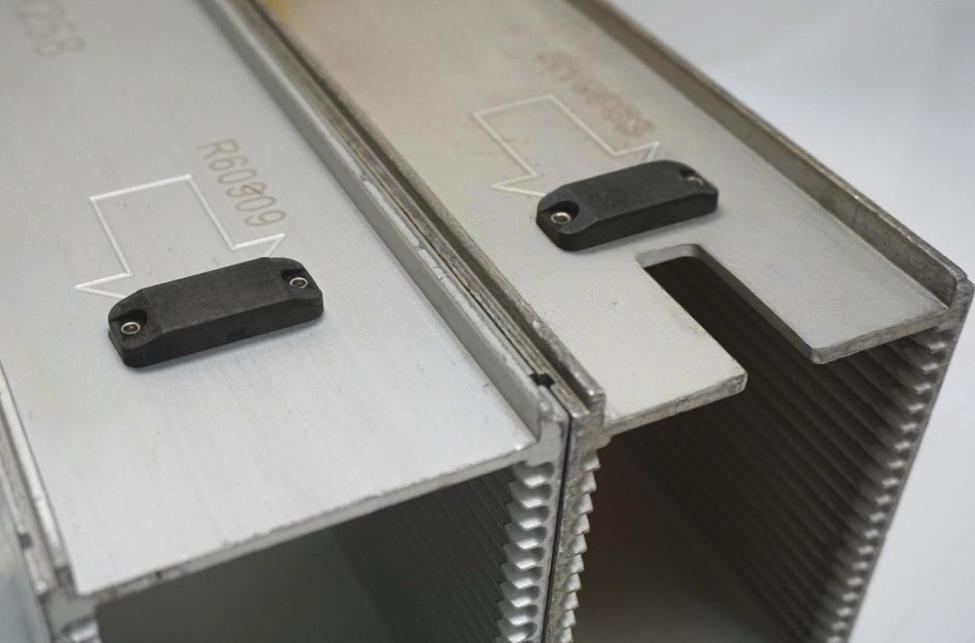
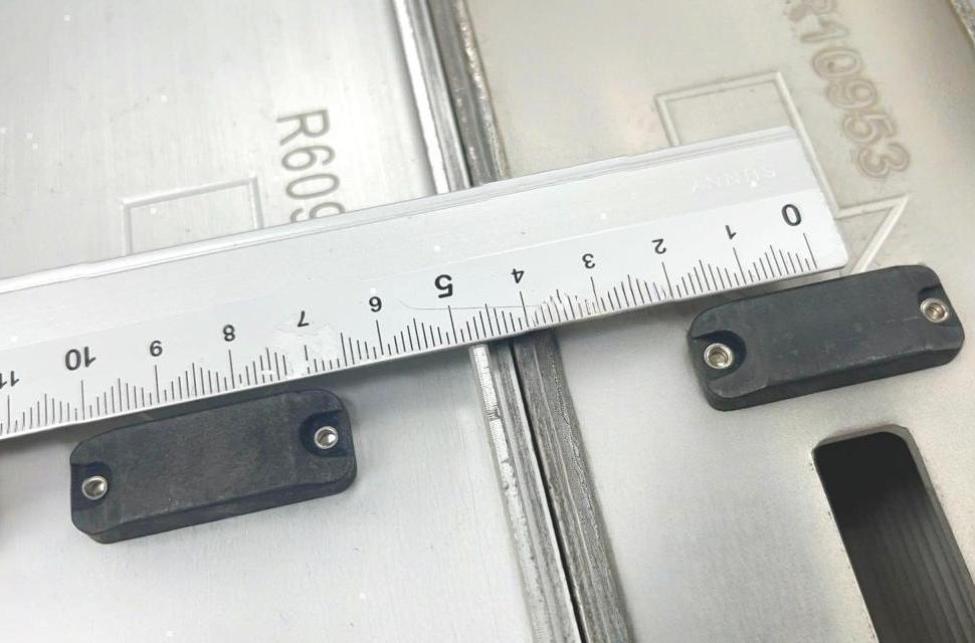
A well-known electronics manufacturer provides downstream process services for TSMC. On its production lines, there are tens of thousands of wafer carriers used for the transport and storage of wafers. Each carrier is equipped with a fixed RFID tag and identified uniquely by an EPC code.
Since the carriers are identical in size and arranged remarkably close to each other (with only about 8 cm between tags), the system must, when accessing a wafer carrier:
- Accurately read the RFID tag of the specified carrier.
- Avoid misreading the tags of adjacent wafer carriers.
- Coordinate with the robotic arm workflow by completing the steps of verification and confirmation in advance.
This makes “no misreads” the key factor determining whether the system succeeds or fails.
Because the wafer carriers are placed so closely together, the engineers first had to solve the following issues:
- The RFID antenna’s read range being too large.
- There are electromagnetic waves reflecting, diffracting, and refracting in a metallic environment.
- A high likelihood of misreading nearby tags.
This is one of the most challenging issues in RFID applications.

The engineers first focused on optimizing the antenna:
- They adjusted the antenna to a near-field sensing antenna.
- They modified the antenna’s polarization so that its function of reading is strongest at a specific angle and weakest at other angles.
- They narrowed the reading beam as much as possible to lock onto a single tag.
These adjustments significantly increased the likelihood of “reading only the intended tag.” However, after on-site implementation, it was found that metal structures caused electromagnetic reflections and other effects, and the tuning of antenna alone still could not achieve 100% avoidance of misreads. After a period of testing, the engineers categorized certain scenarios in which the environment led to misreads, and then moved on to the second phase:
- They tuned the RFID read commands in depth.
- They modified the logic of the internal software for the equipment.
- They added misread filtering and EPC verification procedures.
- They enabled the system to automatically identify the correct tag and ignore incorrect reads.
Through the dual-track optimization of both hardware and software, KWD ultimately succeeded in making the system read only the designated carrier. After one and a half months, KWD successfully completed this case, delivering both technical and practical adjustments to fully meet the client’s needs.
Keewing-ID Industrial Co., Ltd. (KWD) is a technology-driven professional system integration company. Our engineering team has many years of on-site practical and project experience and can provide precise and fully implementable solutions tailored to the needs of different industries.
Compared with traders that only sell standardized products or low-cost equipment without customization, we offer a full range of capabilities in tuning of antenna, firmware modification, software integration, and process optimization. This allows us to confront on-site issues head-on, resolve technical bottlenecks, and help clients truly complete project implementation rather than merely “sell hardware.”